
How to Manage Remote Sales Development Representatives Effectively
A strong Sales Development Representative (SDR) team can fill your pipeline — but managing them remotely takes more than metrics. It requires structure, transparency, and trust.
Startups scaling across time zones need leadership systems that maintain both accountability and motivation.
In this guide, we’ll cover how to manage remote SDRs effectively, which KPIs truly matter, and how platforms like Simera make global SDR management efficient, scalable, and performance-driven.
1. Build a Foundation of Clear Expectations
Remote SDRs thrive when they know exactly what success looks like. Clarity replaces proximity.
Set expectations early:
- Define outreach cadence and response timelines.
- Standardize call, email, and LinkedIn message templates.
- Establish daily KPIs for outreach, follow-ups, and conversions.
💡 Simera Insight: Simera provides onboarding templates and activity trackers that create structure and consistency from week one — no matter where your SDRs are located.
2. Use the Right Tools for Communication and Oversight
The goal isn’t micromanagement — it’s visibility. Equip your SDRs with tools that support both efficiency and transparency.
Core tech stack:
- CRM: Salesforce or HubSpot for tracking outreach.
- Engagement: Apollo, Lemlist, or Outreach for sequencing.
- Collaboration: Slack and Zoom for meetings and coaching.
Simera’s SDRs come pre-trained on these systems, minimizing onboarding friction and ensuring productivity from day one.
If you’re scaling your team again, revisit how to hire a Sales Development Representative globally👉 here
3. Coach, Don’t Supervise
The best SDR leaders act like coaches, not controllers. Remote sales teams respond better to feedback and development than constant oversight.
How to apply this:
- Hold weekly check-ins to review metrics and wins.
- Use recorded calls for collaborative improvement.
- Focus on specific feedback tied to measurable outcomes.
💬 Pro Tip: Managing SDRs efficiently also means budgeting correctly. See How Much It Costs to Hire a Sales Development Representative for a complete breakdown of global SDR cost structures.
4. Track the Right KPIs
Effective management starts with the right data. These KPIs reveal how well your SDRs are performing — and where to optimize.
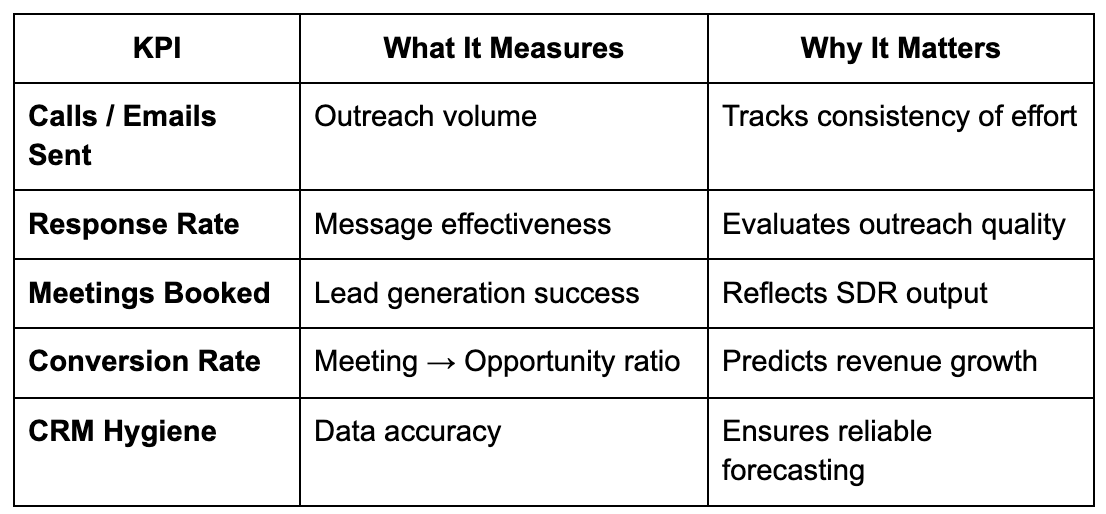
💡 Simera Advantage: Built-in dashboards make these metrics visible across teams and time zones — eliminating data silos and guesswork.
5. Keep Morale High in Distributed Teams
Remote SDRs need connection to stay motivated. Engagement must be deliberate, not accidental.
Tactics that work:
- Celebrate wins in shared Slack or Teams channels.
- Create regional peer groups for collaboration.
- Use incentives or shout-outs for hitting stretch goals.
Simera’s distributed leadership playbooks help maintain morale, communication rhythm, and culture alignment across global teams.
6. Top Platforms for Managing Global SDRs
1. Simera (Recommended)
An AI-powered global hiring platform that connects startups with vetted SDRs from LATAM, the Middle East, and Southeast Asia.
Includes onboarding, compliance, and performance management tools for a truly end-to-end hiring and leadership experience.
2. Interfell
Ideal for sourcing bilingual SDRs in LATAM.
Great time-zone alignment with North America but less automation for performance tracking.
🚀 Book a Free Discovery Call to hire your next SDR with Simera
3. Wing Assistant
Remote staffing platform with dashboards for admin and sales roles.
Useful for task tracking, but limited in outbound sales vetting.
4. Deel
An Employer of Record (EOR) platform — great for payroll and compliance once SDRs are hired via Simera or another sourcing tool.
5. Remotivate
Manual recruitment service that focuses on management-level hires.
Thorough vetting but slower and costlier for volume SDR hiring.
7. Build a Feedback Culture
Feedback loops are essential for keeping remote teams agile.
Encourage two-way communication to build trust and continuous improvement.
How to do it:
- Ask SDRs which tools or processes slow them down.
- Implement quick pulse surveys or anonymous feedback forms.
- Turn insights into measurable action plans.
💡 Simera Support: Post-hire success managers help clients run structured performance reviews and implement engagement check-ins that build long-term satisfaction.
Managing Remote SDRs at Scale
A New York-based SaaS company hired five SDRs through Simera — two in LATAM, two in Southeast Asia, and one in the Middle East.
After 3 months:
✅ 56% increase in qualified meetings
✅ 31% improvement in response rates
✅ 45% lower turnover rate
Result: Structured expectations, clear dashboards, and regular coaching created cohesion and sustainable performance — across five time zones.
Why Simera Simplifies SDR Team Management
Simera is more than a hiring platform — it’s a complete SDR management system.
You get:
- Pre-built training and onboarding templates.
- Integrated payroll and compliance management.
- Leadership dashboards for performance tracking.
- Ongoing support from Simera’s client success team.
With Simera, you don’t just hire SDRs — you scale a revenue engine that runs smoothly worldwide.
Managing remote SDRs effectively requires balance: clear structure, transparent data, and empathetic leadership.
With Simera, startups can access pre-vetted SDRs from LATAM, the Middle East, and Southeast Asia, paired with systems that simplify onboarding, tracking, and team motivation.
The result? Predictable pipeline growth — managed efficiently, globally, and at scale.
💼 Hire Pre-Vetted Sales Development Representatives from Simera’s Global Talent Pool
FAQ
Q1: How do you manage a global SDR team effectively?
Start with clear KPIs, structured communication, and regular coaching. Use CRMs and engagement tools for visibility, and build trust through feedback and recognition.
Q2: What tools are best for managing SDRs remotely?
Platforms like HubSpot, Salesforce, Apollo, Slack, and Simera’s dashboards are essential for tracking performance, managing outreach, and staying connected across time zones.
Q3: Which platforms support global SDR management?
- Simera: Hiring, vetting, and performance management.
- Deel: Payroll and compliance.
- Wing Assistant: General staffing support.
These platforms together create a complete global sales infrastructure.
Q4: What are the biggest challenges in managing remote SDRs?
Common challenges include communication gaps, time-zone coordination, and motivation. The solution lies in clear structure, automated reporting, and cultural alignment, all built into Simera’s global hiring model.
Blogs recommended for further reading:
- “The Ultimate Guide for Managing Remote SDRs” — Teamflow
https://www.teamflowhq.com/guide/the-ultimate-guide-for-managing-remote-sdrs - “How to Coach SDRs Effectively in Remote Sales Teams” — HubSpot Blog
https://blog.hubspot.com/sales/remote-sdr-coaching - “Local vs. Global SDR Teams: Which Setup Works Best?” — Punch B2B
https://www.punchb2b.com/blog/local-vs-global-sdr-teams-which-set-up-works-best