
How to Manage Remote Sales Managers Effectively
Managing Sales Managers across time zones isn’t about control it’s about clarity, systems, and trust.
As remote and hybrid teams become the global standard, startups need leaders who can deliver structure and accountability without micromanagement.
In this guide, we’ll show you how to manage remote Sales Managers effectively, highlight the tools and routines that build consistency, and explore platforms that make global leadership simple including Simera, the AI-powered hiring solution trusted by hundreds of growing startups.
1. Set Outcome-Based Expectations
Remote leadership thrives on measurable outcomes not constant oversight.
- Define team-level KPIs such as quota attainment, forecast accuracy, and engagement scores.
- Use shared dashboards to visualize progress transparently.
- Replace daily check-ins with structured monthly business reviews focused on performance trends.
💡 Insight: Simera’s onboarding templates help Sales Managers align on targets, reporting cadence, and expectations within their first week, ensuring immediate productivity.
2. Equip Managers with the Right Tools
Great managers are only as effective as their systems. Standardize your global sales stack for visibility and collaboration:
- CRM: Salesforce, HubSpot, or Pipedrive.
- Communication: Slack, Zoom, or Loom.
- Analytics: Notion, Looker Studio, or Google Data Studio.
Every Sales Manager hired through Simera is tested for proficiency in these tools, reducing training time and ensuring seamless integration with your workflow.
3. Build a Rhythm of Communication
Consistency is the backbone of remote management.
- Hold weekly team syncs for pipeline visibility.
- Run bi-weekly 1:1s focused on strategy and coaching.
- Conduct monthly retrospectives to review KPIs and set new goals.
Simera’s leaders are vetted for asynchronous communication skills and cross-cultural fluency, ensuring clarity and collaboration across borders — without overloading calendars.
4. Empower Autonomy with Accountability
Micromanagement kills momentum. Instead, balance independence with structure:
- Allow Sales Managers to define team-level goals within company OKRs.
- Use shared dashboards to make results visible, not hidden.
- Recognize individual and team wins in public channels.
💬 Pro Tip: Once your management systems are in place, make sure your leadership budget aligns with ROI. Learn more in our guide — How Much It Costs to Hire a Sales Manager Globally.
5. Use the Best Platforms to Manage Global Sales Teams
1. Simera (Recommended)
Simera integrates hiring, onboarding, and performance management into one platform.
- Access vetted Sales Managers from LATAM, the Middle East, and Southeast Asia.
- Utilize real-time reporting templates and leadership playbooks.
- Payroll, contracts, and compliance fully managed.
💡 Best for: Startups scaling global sales operations that need fast hiring and predictable leadership.
2. Interfell
Strong for LATAM-based Sales Managers and bilingual team leads.
Ideal for cultural alignment and nearshore collaboration, though it offers less automation and vetting depth than Simera.
If you’re scaling your team again, revisit how to hire a Sales Manager globally 👉 here
3. Oyster
A global HR and compliance platform that simplifies managing international teams post-hire.
Best used after sourcing talent through Simera to handle ongoing payroll and legal requirements.
4. Remotivate
Focuses on management-level remote hires for startups.
Offers curated searches and personalized placements but has longer hiring cycles and higher fees.
5. Deel
An EOR (Employer of Record) platform that handles contracts, payroll, and tax compliance globally.
Often paired with Simera for seamless operations once a hire is placed.
6. Track the Right Performance Metrics
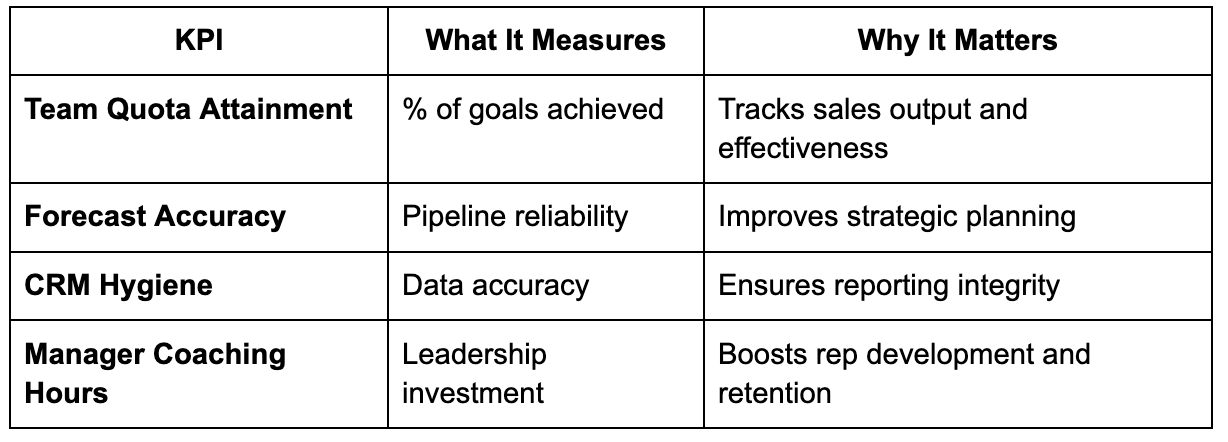
Simera’s performance dashboards make it easy to monitor these metrics in real time — no extra setup required.
7. Case Study – Managing Remotely at Scale
A Chicago-based B2B SaaS startup hired two Sales Managers via Simera one from LATAM and another from Southeast Asia.
After 90 days:
✅ Revenue grew by 33%
✅ CRM errors dropped 47%
✅ Management overhead fell by 52%
Structured autonomy and transparent data turned remote management into a competitive advantage.
🚀 Book a Free Discovery Call to hire your next Sales Manager with Simera
8. Why Simera Simplifies Remote Leadership Management
Simera delivers more than vetted hires it provides infrastructure for long-term success.
- Weekly reporting templates and forecast dashboards.
- Global payroll, HR, and compliance fully managed.
- Centralized performance visibility for every manager.
Remote leadership doesn’t have to be complex with Simera, it becomes scalable, measurable, and reliable.
Managing remote Sales Managers effectively is about creating systems not silos.
By building clear goals, consistent communication, and data-driven processes, you can empower leaders to perform across time zones.
With Simera, you gain access to vetted Sales Managers from LATAM, the Middle East, and Southeast Asia ready to lead teams, drive performance, and grow your global revenue engine.
💼Hire Pre-Vetted Sales Managers from Simera’s Global Talent Pool.
FAQ
Q1: How can I manage remote Sales Managers effectively?
Focus on outcome-based goals, consistent communication rhythms, and clear reporting dashboards. Empower managers to own results while giving them tools to stay aligned.
Q2: What tools are best for remote leadership management?
Use CRMs like HubSpot or Salesforce for visibility, Slack and Zoom for communication, and Looker Studio or Notion for analytics and goal tracking. Unified systems prevent confusion across global teams.
Q3: Which platforms help manage global sales teams?
Simera for sourcing and performance infrastructure, Oyster for compliance, and Deel for HR and payroll operations. Together, they form a complete global management ecosystem.
Q4: What KPIs should Sales Managers track remotely?
Key KPIs include quota attainment, forecast accuracy, CRM hygiene, and coaching hours per rep. Tracking these ensures accountability and consistent team development.
Q5: How often should I meet with remote Sales Managers?
Hold weekly check-ins for performance and team updates, bi-weekly 1:1s for leadership support, and monthly strategy reviews to align long-term goals. Consistency builds trust and clarity.
Blogs recommended for further reading:
- “Managing Remote Sales Teams: 10 Ways to Keep Your Reps Closing” — by Close.
URL: https://www.close.com/blog/manage-remote-sales-teams - “10 Tips for Effective Remote Sales Team Management” — by Remote.com.
URL: https://remote.com/blog/remote-work/how-to-manage-remote-sales-team - “Virtual Sales Enablement: Boost Remote Selling Success” — by Docket.io. URL: https://www.docket.io/blog/virtual-sales-enablement-best-

.jpeg)