
Cost of Hiring a Remote Bookkeeper in 2025
Bookkeeping costs are evolving fast. With remote work now standard, startups and small businesses can access global accounting talent from regions like Latin America (LATAM) and the Middle East & North Africa (MENA), reducing costs while maintaining high-quality standards.In this guide, we’ll break down the cost of hiring a remote Bookkeeper in 2025, compare salary ranges by region, and explain the key factors that influence global bookkeeping rates.
Why Remote Bookkeeping Is on the Rise
The global demand for Bookkeepers increased by 19% in 2025 (Simera Global Talent Benchmark). Startups prefer remote talent because it offers:
- Cost reduction without losing accuracy.
- Access to experienced professionals trained in U.S. GAAP and global compliance.
- Time zone overlap for smooth collaboration.
LATAM and MENA have emerged as leading regions for startups seeking affordable, bilingual Bookkeepers familiar with QuickBooks, Xero, and multi-currency accounting.
🚀 Book a Free Discovery Call to Estimate Your Global Bookkeeping Costs
Average Cost of Hiring a Bookkeeper in 2025
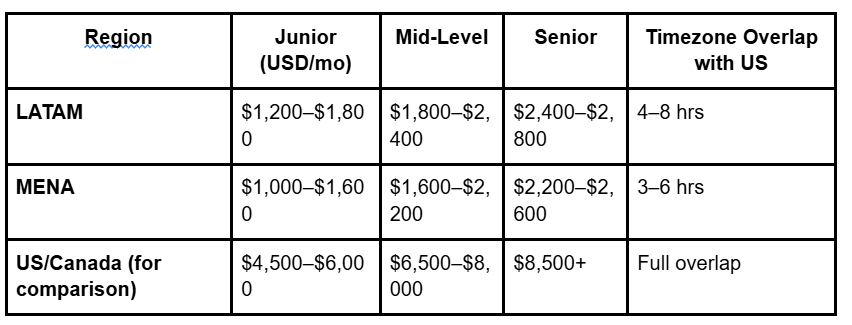
Source: Simera Global Talent Benchmark 2025, LinkedIn Finance Salary Report 2025
👉 On average, hiring from LATAM or MENA saves 50–65% on total costs (salary, benefits, and overhead).
Cost Breakdown by Role Type
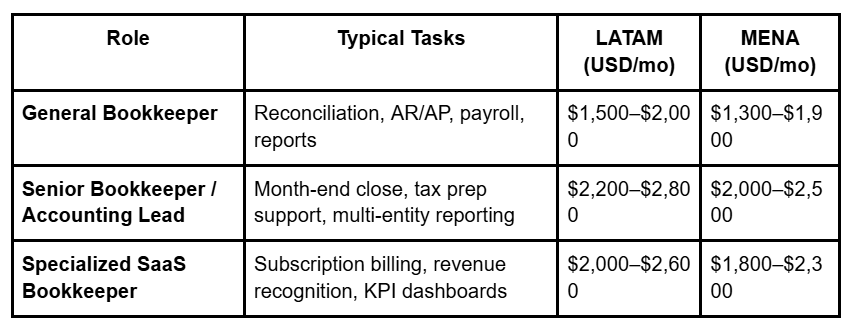
The most significant cost variation comes from experience level and tool specialization Bookkeepers proficient in multiple accounting platforms command slightly higher rates.
What Drives Bookkeeping Costs
1. Skill Specialization
Proficiency in QuickBooks Online, NetSuite, and financial automation tools increases demand and pay range.
2. Region & Living Cost
LATAM and MENA offer cost advantages due to lower living expenses and competitive talent supply.
3. Hiring Model
- Contract-based: Ideal for part-time or short projects.
- Full-time remote (EoR): Best for growing startups seeking continuity and compliance.
4. Experience Level
Senior professionals with multi-entity or SaaS accounting experience command higher rates but deliver higher accuracy and efficiency.
Real Startup Comparison Example
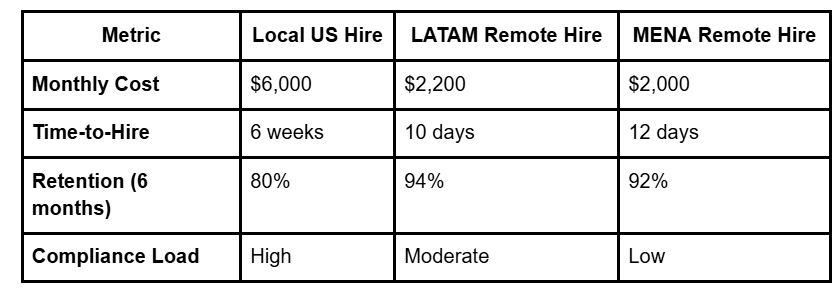
Startups that build remote finance pods (Bookkeeper + AP/AR + Ops Analyst) reduce operational expenses while improving delivery speed and retention.
How to Estimate Your Total Cost
When budgeting for a remote Bookkeeper, consider:
- Base pay (region-dependent)
- Software subscriptions (QuickBooks, Xero, etc.)
- Payroll or EoR fees (if applicable)
- Training and onboarding time
Most businesses achieve break-even ROI within 3–4 months due to improved reporting and fewer accounting errors.
Tips for Reducing Costs Without Losing Quality
- Hire based on skills, not titles (e.g., “Accounts Reconciliation Specialist” vs. “Bookkeeper”).
- Automate repetitive tasks using QuickBooks Online or Xero Workflows.
- Consider multi-region hiring to balance cost and timezone coverage.
- Standardize processes early (SOPs, shared templates).
💼 Hire Pre-Vetted Bookkeeper Professionals from Our Global Talent Pool
FAQ
Q1: How much does it cost to hire a remote Bookkeeper?
A: The average monthly cost ranges from $1,000 to $2,800, depending on the region, experience level, and specialization.
Q2: Which regions offer the most affordable Bookkeeping talent?
A: Latin America and MENA are cost-effective regions with strong English proficiency and U.S. accounting familiarity.
Q3: What factors influence Bookkeeping rates?
A: Experience, software proficiency, role complexity, and the employment model (contractor or full-time) all affect pricing.
Q4: Is remote Bookkeeping reliable for startups?
A: Yes. With secure software and standardized processes, remote Bookkeepers can maintain high accuracy and compliance standards.
Q5: How can companies estimate the total cost of hiring?
A: Businesses should include base salary, payroll or platform fees, software subscriptions, and onboarding time when calculating total cost.